Wineglass Bay might receive most of the attention in Freycinet National Park, but just a short drive away you’ll find a much smaller coastal spot that deserves a place on your Tasmania road trip.
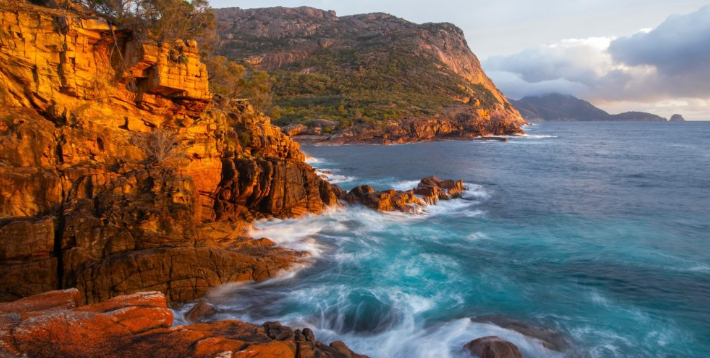
Sleepy Bay is a secluded rocky cove on the eastern side of the Freycinet Peninsula, surrounded by pink granite, orange lichen and the brilliant blue-green water that Tasmania’s east coast is famous for.
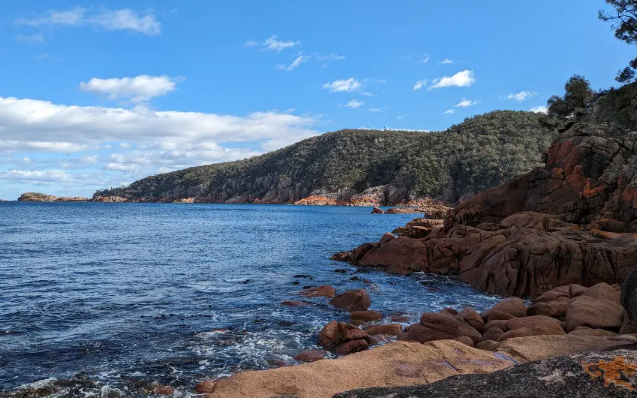
Despite the peaceful-sounding name, Sleepy Bay can be surprisingly wild. The bay faces directly towards the Tasman Sea, and waves regularly crash against its rocky shoreline. Tasmania Parks and Wildlife Service specifically notes that the bay often experiences rough seas — making the name “Sleepy Bay” slightly misleading.
Best of all, you don’t need to spend hours hiking to see it. The walk from the car park is only 500 metres return and around 20 minutes, making Sleepy Bay one of the easiest scenic stops to add to a day exploring Freycinet.
What makes Sleepy Bay worth visiting?
Sleepy Bay is very different from the long stretches of white sand you’ll find elsewhere around Freycinet.
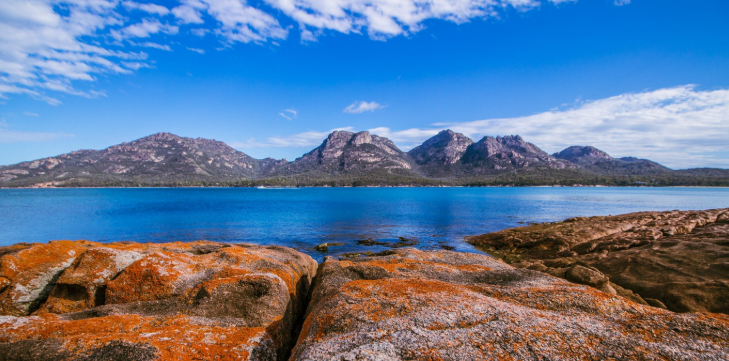
Instead, the small bay is tucked between rugged granite outcrops, with a gravelly shoreline surrounded by colourful rocks. The granite is streaked with pink and red, while patches of bright orange lichen create the distinctive colours seen throughout Tasmania’s east coast.
The water can range from deep blue to brilliant turquoise depending on the weather, while the surrounding bushland makes the cove feel surprisingly isolated considering how close it is to Coles Bay.
It’s particularly beautiful around sunrise. Discover Tasmania describes Sleepy Bay as a tiny beach between pink granite outcrops where the red rocks and shoreline light up in the morning sun.
If you’re into photography, this is definitely somewhere worth getting out of bed early for.
Where is Sleepy Bay?
Sleepy Bay is located inside Freycinet National Park on Tasmania’s east coast, close to Cape Tourville.
Freycinet National Park is approximately 2½ to 3 hours’ drive from either Hobart or Launceston. From the Tasman Highway, turn onto Coles Bay Road around 12 kilometres south of Bicheno and follow the road towards Coles Bay and Freycinet National Park.
Once inside the park, follow the road towards Cape Tourville. Sleepy Bay is located along this eastern section of the peninsula, making it very easy to combine with the Cape Tourville Lighthouse walk.
The road access means you can experience a surprisingly wild part of the Freycinet coastline without committing to one of the park’s longer bushwalks.
The Sleepy Bay walk
The official Sleepy Bay walk is approximately 500 metres return, generally taking around 20 minutes, and is classified as a Grade 3 walk.
From the car park, the track heads downhill through coastal vegetation towards the bay.
Tasmania Parks and Wildlife Service describes gently graded steps leading towards the rocky shoreline, although parts of the track are uneven and relatively steep. Discover Tasmania recommends good footwear because the track can be rough underfoot.
Once you reach the bottom, you’re greeted by a small gravel beach surrounded by granite boulders and rocky headlands.
Twenty minutes might be the official walking time, but we’d allow at least 30 to 45 minutes so you can explore the shoreline, take photos and enjoy the scenery without rushing.
Don’t expect a sleepy ocean
One of the first things you’ll probably notice is that Sleepy Bay isn’t always particularly sleepy.
The cove faces Tasmania’s exposed east coast and can experience wild and rough seas, even when conditions around Coles Bay appear relatively calm.
When there’s a decent swell running, watching waves roll into the granite coastline is one of the highlights.
It also means you should treat the water with respect.
Sleepy Bay isn’t the kind of sheltered swimming beach we’d recommend automatically jumping into. Conditions vary, there are rocks throughout the bay and waves can be powerful.
Enjoy the shoreline, but stay well clear of exposed rocks when waves are breaking across them and supervise children closely around the water.
Explore Freycinet’s famous pink granite
Freycinet National Park is famous for its dramatic granite landscapes.
The park contains pink granite peaks, secluded bays, white beaches and rocky coves, with the Hazards forming the spectacular mountain backdrop seen from Coles Bay.
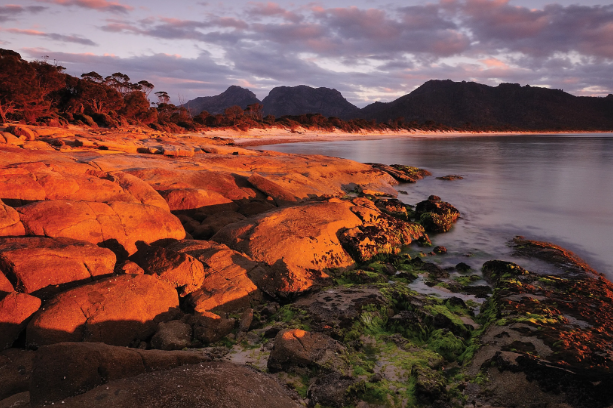
Sleepy Bay provides one of the easiest opportunities to see that granite up close.
The rocks along the shoreline display shades of pink, red, grey and orange, with sections covered in colourful coastal lichen.
Take care if you’re exploring the rocks around the edge of the bay. Wet granite can become extremely slippery, particularly close to the water.
Sometimes the best view is simply from the beach.
Combine Sleepy Bay with Cape Tourville
If you’re driving out to Sleepy Bay, you should absolutely continue to Cape Tourville.
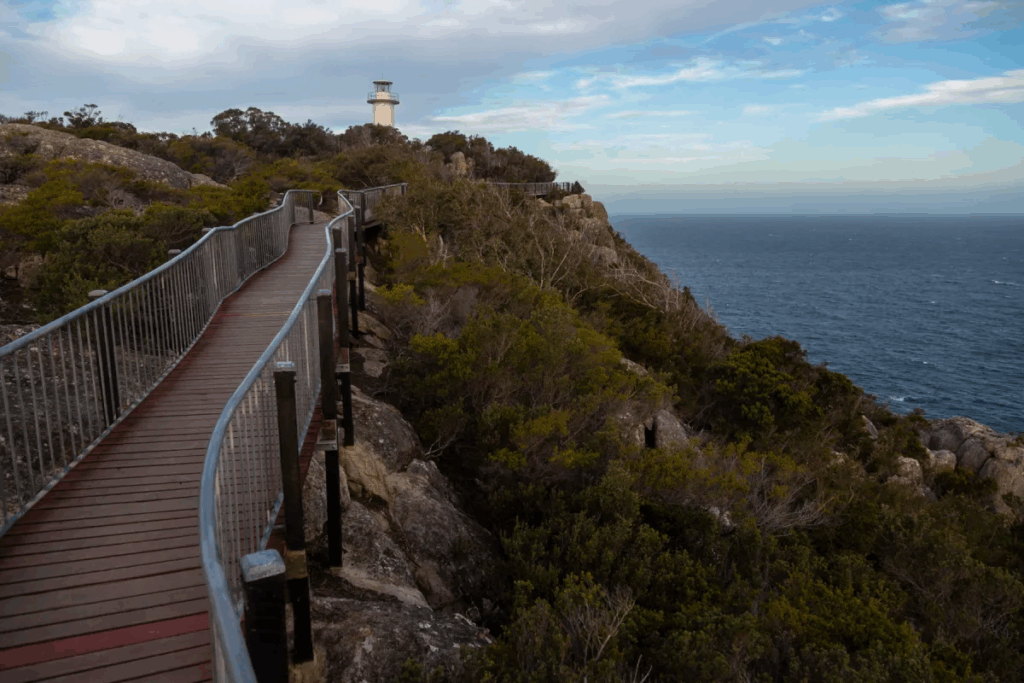
Cape Tourville is another short Freycinet walk and follows an elevated boardwalk around the automated lighthouse, providing expansive views across the Tasman Sea and the coastline of Freycinet National Park.
It is one of the easiest ways to get a big coastal view without climbing a mountain.
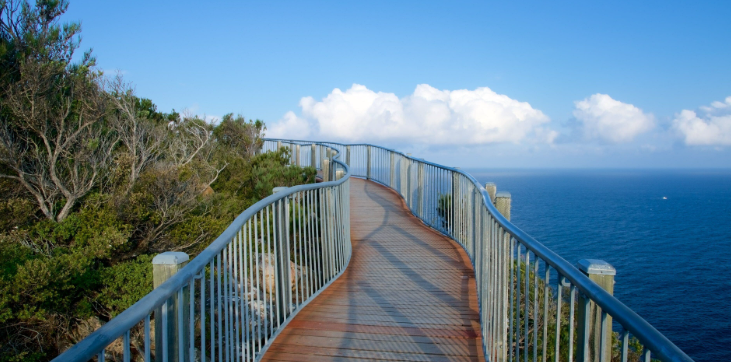
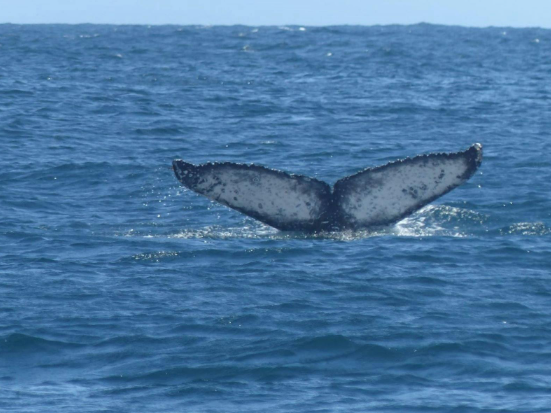
Cape Tourville is also part of Tasmania’s East Coast Whale Trail. Between roughly May and November, visitors may have the chance to spot migrating humpback or southern right whales offshore.
Sleepy Bay and Cape Tourville work perfectly together: park the car, complete each short walk and experience two very different views of Freycinet’s eastern coastline.
And, of course, visit Wineglass Bay
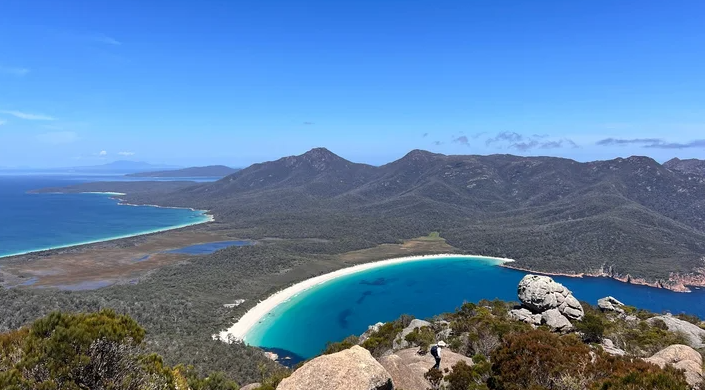
You can’t really visit Freycinet National Park without at least considering Wineglass Bay.
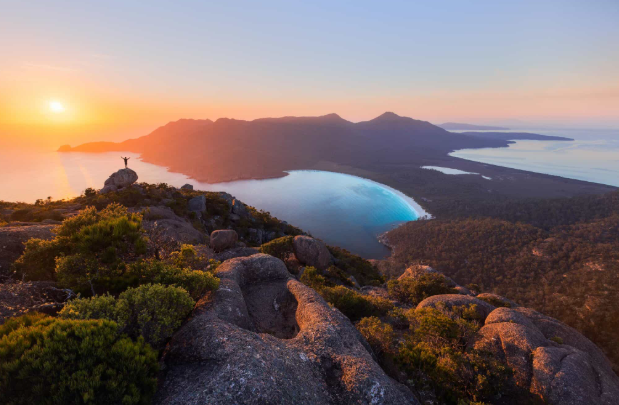
The Wineglass Bay Lookout walk climbs into the saddle between the Hazards and provides the famous view looking down across the curved white beach and turquoise water.
If you’ve got more time and energy, you can continue down approximately 1,000 steps to Wineglass Bay Beach itself.
A great Freycinet day could look something like:
- Arrive early and walk to Wineglass Bay Lookout.
- Return to your rental car and stop for lunch around Coles Bay.
- Drive to Sleepy Bay for the short coastal walk.
- Continue to Cape Tourville Lighthouse.
- Finish the afternoon around Honeymoon Bay or Coles Bay.
That gives you mountains, beaches, coastal cliffs and some seriously impressive Tasmanian scenery without spending the entire day in the car.
Stop at Honeymoon Bay
Another easy stop is Honeymoon Bay, located closer to the main Freycinet Visitor Centre.
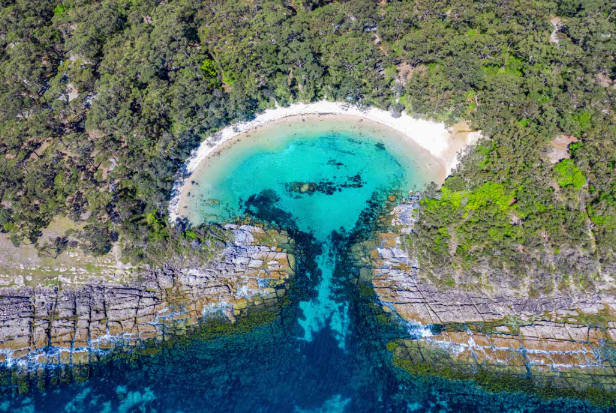
It’s a small, sheltered bay with beautiful views across the water towards the Hazards and provides a very different experience from the exposed coastline at Sleepy Bay.
Discover Tasmania highlights Honeymoon Bay as one of several smaller beaches worth exploring beyond Wineglass Bay.
It can be particularly beautiful later in the afternoon when the lowering sun hits the granite peaks.
Because all these attractions are relatively close together, having a rental car makes it easy to move between them as the weather changes.
Is Sleepy Bay suitable for families?
For families travelling around Tasmania, Sleepy Bay is a good option because the walk is short enough that it doesn’t become an expedition.
The 20-minute return walk is manageable for most active children, although its Grade 3 classification means you shouldn’t expect a perfectly flat boardwalk. There are steps, uneven ground and rougher sections of track.
Young children will need supervision around the rocky shoreline, particularly when the sea is rough.
If you’ve already dragged the kids up to Wineglass Bay Lookout earlier in the day, Sleepy Bay is also a considerably easier second walk.
Do you need a 4WD?
No. You don’t need a four-wheel drive to visit the main visitor areas of Freycinet National Park, including Sleepy Bay.
Access to the main section of Freycinet is via Coles Bay Road, with Sleepy Bay reached by following the established national park road network towards Cape Tourville.
A normal passenger vehicle or SUV is perfectly appropriate for a standard Freycinet road trip.
As always with a rental vehicle, stick to designated roads and parking areas and avoid unapproved tracks or beach driving.
You’ll need a Tasmania Parks Pass
Because Sleepy Bay is inside Freycinet National Park, a valid Tasmania Parks Pass is required to enter the park.
If you’re planning to visit several national parks during your Tasmania road trip — perhaps Freycinet, Cradle Mountain, Mount Field or Franklin-Gordon Wild Rivers — it’s worth comparing the available multi-park pass options rather than purchasing entry separately each time.
Pass requirements and prices can change, so check Tasmania Parks and Wildlife Service before travelling.
What to bring to Sleepy Bay
You don’t need much equipment for such a short walk, but this is Tasmania, so preparing for several seasons in one afternoon isn’t a bad idea.
Wear comfortable enclosed shoes and bring water, sunscreen, a hat and a jacket.
Even if it’s warm and sheltered around Coles Bay, Sleepy Bay and Cape Tourville can feel significantly cooler once you’re exposed to wind coming off the Tasman Sea.
And bring your camera or phone.
The combination of turquoise water, pink granite and orange lichen is about as Tasmanian as coastal scenery gets.
When is the best time to visit?
Sleepy Bay is worth visiting throughout the year.
Summer generally provides longer daylight hours, making it easier to combine several Freycinet walks in one day.
Autumn and spring can be excellent for walking, with cooler temperatures and fewer peak-season visitors.
Winter brings colder conditions but can also produce dramatic seas and beautifully clear days.
For photographers, sunrise is particularly worthwhile because Sleepy Bay faces towards the eastern coastline and its red granite can catch the early morning light.
If you’re not keen on a pre-dawn start, don’t worry — the bay is impressive at any time of day.
Make Freycinet part of a Tasmania east coast road trip
Freycinet National Park sits perfectly along Tasmania’s east coast touring route.
If you’re driving from Launceston, you can approach via the Tasman Highway before turning onto Coles Bay Road. Freycinet is roughly 2½ to 3 hours from Launceston.
Stay overnight around Coles Bay and you can spend a full day exploring without rushing.
From Freycinet, continue south towards Swansea, Triabunna, Orford and eventually Hobart, or head north towards Bicheno, Scamander, St Helens and the Bay of Fires.
It’s one of those parts of Tasmania where having your own car really pays off. There are simply too many beaches, lookouts and little coastal detours to stick rigidly to an A-to-B itinerary.
Discover Sleepy Bay with a Tasmania rental car
Sleepy Bay proves you don’t need to tackle a massive hike to find somewhere spectacular in Freycinet National Park.
A short walk from the car takes you down to a secluded cove surrounded by colourful granite, orange lichen and turquoise water — with the Tasman Sea providing the soundtrack.
Combine Sleepy Bay with Cape Tourville, Wineglass Bay, Honeymoon Bay and Coles Bay and you’ve got the makings of an unforgettable day exploring Tasmania’s east coast.
Pick up your Redspot rental car, follow the road into Freycinet National Park and discover one of the peninsula’s quieter coastal gems at Sleepy Bay.